 Reviews



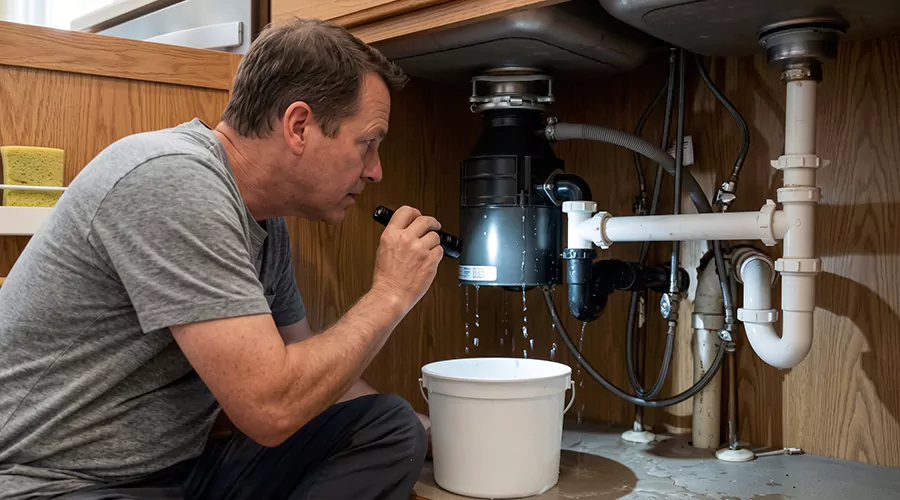
A garbage disposal usually leaks because its sink mounting seal, discharge gasket or dishwasher connection is no longer watertight. Water appearing near the bottom can also indicate an internal appliance problem, but the source should be traced before assuming the entire disposal has failed. According to July 2026 U.S. pricing data, professional garbage disposal repair averages approximately $230, while replacement averages around $550.
Identifying where the water first appears is the most important step when diagnosing a garbage disposal leaking underneath the kitchen sink.
Where Can a Garbage Disposal Leak From?
A garbage disposal has several connections where water can escape. Its mounting assembly joins it to the sink, while the discharge outlet connects to the drainage system. Some installations also include a dishwasher hose.
Common leak locations include:
- Sink mounting assembly: Water escapes where the disposal joins the sink.
- Discharge connection: A gasket or connection near the outlet allows wastewater to drip.
- Dishwasher inlet: A loose clamp or damaged hose connection creates a leak.
- Adjacent plumbing: A P-trap or other connection allows drainage water to escape.
- Appliance housing: Internal deterioration allows water to pass through the disposal itself.
- Lower housing: Water appears beneath the appliance, although the original leak may be located higher up.
InSinkErator recommends checking the mounting assembly, discharge connection and dishwasher inlet separately before concluding that the disposal has an internal leak.
What Does the Leak Location Tell You?
The location of the first drop can help narrow the failed component. However, water can follow the outside of the appliance before falling, which means a puddle beneath the motor does not prove that the motor housing is damaged.
| Leak Location | Possible Cause | Initial Investigation |
|---|---|---|
| Around the top | Mounting seal or hardware | Inspect the sink flange |
| Side discharge | Gasket or outlet connection | Check the discharge assembly |
| Dishwasher connection | Hose, clamp or inlet | Inspect the connection |
| Adjacent drainpipe | Loose or damaged joint | Check the P-trap |
| Confirmed internal housing leak | Internal deterioration | Contact manufacturer or repair professional |
| Water appearing at bottom | Upper leak or internal problem | Trace the water from above |
This distinction follows manufacturer troubleshooting guidance rather than assuming that every leak beneath the unit requires replacement.
What Are the Warning Signs of a Garbage Disposal Leak?
A disposal leak can develop gradually and remain hidden inside the kitchen cabinet.
Check for these warning signs:
- Water collects directly beneath the appliance.
- The cabinet floor remains damp after sink use.
- Drops form near the disposal's upper mounting assembly.
- The discharge connection becomes wet during drainage.
- Water appears when the dishwasher operates.
- The disposal housing develops visible corrosion.
- A musty odor develops inside the cabinet.
- Water continues dripping after the sink has drained.
- Electrical components or wiring appear wet.
- The leak returns after an earlier gasket repair.
Electrical moisture deserves particular caution. Stop using the disposal and disconnect power safely before attempting further inspection. Do not operate an appliance with suspected water exposure to its electrical components.
Why Is My Garbage Disposal Leaking From the Top?
A leak from the top commonly involves the mounting assembly that connects the disposal to the sink. The mounting system may contain sealing material, gaskets and supporting hardware. A leak can develop when these components deteriorate or become incorrectly seated.
Possible causes include:
- Worn sealing material beneath the sink flange.
- A damaged rubber or fiber gasket.
- Loose mounting screws.
- Improperly seated mounting hardware.
- A deteriorated cushion mount.
- Incorrect assembly following a recent installation.
For an existing disposal, Moen recommends inspecting the mounting hardware, gaskets and sealing material when water appears around the top. Do not attempt to tighten every component indiscriminately. The correct adjustment depends on the installed mounting system.
Why Is My Garbage Disposal Leaking From the Side?
A side leak often comes from the discharge connection or dishwasher inlet. These connections carry wastewater away from the disposal and into the kitchen drainage system. A worn gasket or loose discharge connection can allow water to escape during sink use.
If the leak appears near the dishwasher inlet, inspect the hose and clamp according to the appliance manufacturer's instructions. InSinkErator recommends checking the discharge connection for loose hardware, damaged gaskets and cracked outlet components. An accessible damaged gasket may be replaceable without replacing the entire appliance. However, the replacement must match the model's connection design.
Why Is Water Leaking From the Bottom?
Water appearing beneath the disposal can originate from several locations. A leak at the top or side may travel down the appliance housing before forming a drop near the bottom. Therefore, confirm the source before assuming the appliance is internally damaged. A useful distinction is whether water first appears around an external connection or emerges from the disposal's own housing.
Moen's troubleshooting guidance notes that a damaged discharge gasket can allow water to travel between the housing and exterior shell before appearing near the bottom plate. A confirmed internal housing or motor-joint leak is different. The manufacturer or a qualified repair professional should evaluate that condition.
How Do You Find the Exact Leak Source?
The most useful diagnostic method is a staged test that examines one water path at a time. Begin by making the area safe. Disconnect electrical power to the disposal. Clear the cabinet and dry the accessible appliance surfaces.
Then perform these steps:
- Inspect the cabinet: Look for signs of existing water damage.
- Dry the disposal: Remove visible moisture from the exterior.
- Place dry paper towels: Position them around the mounting assembly, discharge connection and dishwasher inlet.
- Fill the sink: Keep the stopper closed initially.
- Check the mounting assembly: Look for moisture before releasing the water.
- Release the stopper: Observe which connection becomes wet as wastewater drains.
- Inspect the discharge connection: Check the paper towels around the outlet.
- Test the dishwasher separately: Observe its connection during the discharge cycle if it is safe to do so.
- Trace the first wet point: Identify the source before replacing any components.
Do not restore power while water is reaching electrical components. Moen recommends a similar paper-towel test to distinguish mounting, discharge and dishwasher-connection leaks.
Can You Fix a Leaking Garbage Disposal Without Replacing It?
Some external connection leaks can be repaired by replacing a damaged gasket or correcting the mounting assembly. The possibility depends on the leak's location and the appliance's condition.
For example:
- A damaged discharge gasket may be replaceable.
- A loose dishwasher hose clamp may need adjustment.
- Deteriorated mounting seals may require replacement.
- A cracked external discharge pipe may be replaceable.
- A confirmed internal housing leak may require manufacturer evaluation or appliance replacement.
Follow the exact installation instructions for the installed model. Disposal mounting systems and discharge connections are not identical across manufacturers.
How Much Does Garbage Disposal Leak Repair Cost in 2026?
The repair cost depends on whether the leak involves an inexpensive external seal or a more substantial appliance failure.
The following figures reflect reported U.S. costs.
| Repair or Replacement | 2026 Cost Reference |
|---|---|
| Replacement gasket or seal part | 3–20 |
| Replacement sink flange part | 8–18 |
| Replacement discharge pipe part | 10–25 |
| Average professional disposal repair | Approximately $230 |
| Average complete disposal replacement | Approximately $550 |
Individual part prices do not include installation labor. Angi's July 2026 repair guide identifies external seals and connections as common disposal leak sources. Its August replacement guide reports an average complete replacement cost of approximately $550. The appliance's condition and the type of failure influence whether repair or replacement is appropriate.
When Should You Call a Professional?
Professional assistance becomes appropriate when the leak involves electrical components or the source cannot be identified safely.
Seek professional evaluation when:
- Water reaches electrical wiring or connections.
- The appliance housing itself appears damaged.
- Water emerges from a confirmed internal motor-joint leak.
- A replacement gasket does not stop the leak.
- The mounting assembly cannot be secured correctly.
- Corrosion affects several appliance components.
- Water damage has spread into the cabinet or surrounding flooring.
A plumber or qualified appliance professional can identify whether the problem involves external plumbing or the disposal itself.
How Can You Prevent Another Garbage Disposal Leak?
Preventive maintenance cannot eliminate every component failure, but regular inspection helps identify moisture before it causes substantial cabinet damage.
Useful habits include:
- Inspect the mounting assembly periodically.
- Check the discharge connection for moisture.
- Look for deterioration around dishwasher hose connections.
- Avoid placing heavy stored items against disposal plumbing.
- Respond to new vibration or unusual appliance movement.
- Inspect for leaks after maintenance or installation work.
- Follow manufacturer instructions for disposal operation and cleaning.
Do not attempt to solve a recurring leak by applying sealant indiscriminately around the appliance. A damaged internal component or incorrectly seated gasket needs the appropriate repair.
Conclusion
A garbage disposal leaking underneath the sink should be diagnosed by identifying the first location where water appears. Mounting seals, discharge gaskets and dishwasher connections are common external leak sources. A puddle beneath the appliance does not automatically mean that its internal housing has failed. Disconnect electrical power before inspection and test the connections separately. If water is reaching electrical components or the appliance has a confirmed internal leak, professional evaluation is appropriate.
Frequently Asked Questions
Why does my garbage disposal leak only when the sink drains?
The discharge gasket or connected drainage plumbing may be leaking when wastewater passes through it.
Can a garbage disposal leak from the bottom without being broken internally?
Yes. Water from an upper connection can travel down the exterior before appearing near the bottom.
Can I replace a leaking garbage disposal gasket?
Some external gaskets are replaceable. Use the correct part and installation instructions for the specific model.
Why does my disposal leak when the dishwasher runs?
The dishwasher inlet, hose connection or shared drainage plumbing may be leaking.
Does a leaking garbage disposal always require replacement?
No. External connection leaks may be repairable. Confirmed internal housing damage requires a separate evaluation.